Format: ebook
Published: 17th September, 2019
Age: Adult
Genre: Non-Fiction – Biography – History
Rating: 2/5 Stars
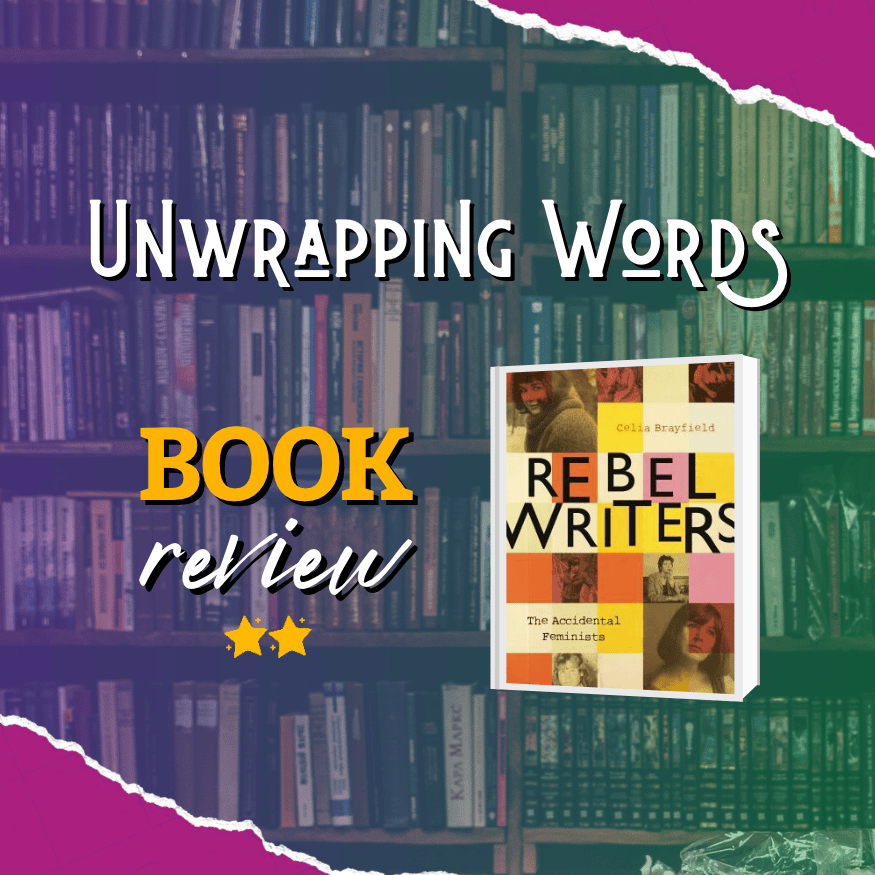
This is one of those books where it’s difficult to grasp who exactly this is aimed at. In Rebel Writers, we’re introduced to a series of women who “wrote about their lives with an honesty that dazzled the world”. According to the blurb, “Celia Brayfield, tells their exceptional story here, for the first time.” Except that’s not what we get in this book. I was expecting biographies of the women, but came out of reading this knowing very little of their lives outside of the works they produced.
Rebel Writers is full of passages from these works, and if you haven’t read this going into this, you’re not going to be particularly keen to read them after having the plots told you a hundred times. It’s clear Brayfield holds (some of) these writers in high regard, but there is so little space dedicated to the women themselves or even the society they were writing in that unless you have literally never ever had any interest in history of this period, you’re not going to discover anything new here.
The literary criticism is barely there, and rather diving into the interesting aspects – why did these women write these stories? What does their writing actually tell us? Why are they important? – we just get the same ideas reiterated, and paragraphs dedicated to telling us what we’ve just read as extracts from the book. It makes for a slow, painful read. And despite emphasising how these women should be as respected and known as the ‘Angry Young Men’ they were writing alongside, and how it’s criminal that so much focus is given to these men over these women, we still get a whole section on Angry Young Men without tying it back into the ‘Rebel Writers’.
I wanted to know more about these women and their influences, but despite the claim they wrote about their lives, it becomes evident that many didn’t. Instead, some of the writers Brayfield spotlights seemed to look at those in lower classes to them and write lurid, sordid tales about the working classes. There’s no examination of this, and in all fairness that might not be correct, but it’s the impression given by the book, and after reading this I unfortunately have very little interest in picking up the books themselves, which seem to be full of poverty porn and racist stereotypes.
I am sure these women had their own difficulties, and that their writing may have had some influence on certain perceptions, but to take Rebel Writers at face value, it sounds like many reforms that benefited women were solely down to these writers. And yet I came out of this book knowing very little about the women themselves except for what they wrote and some of the injustices they faced at the hands of men, instead of anything more substantial about their lives.
Non-fiction more than fiction, in my humble opinion, needs to have a target audience in mind, and that audience should be evident in the book. If you’ve read the books discussed here you’re not going to get much out of it, and if you haven’t, Rebel Writers will likely put you off doing so, especially with the way the author talks down about the working class, downplays the racism in the books, and lacks any sort of deeper critical engagement with these works.
That said, if you have read the works of the writers discussed here (Shelagh Delaney, Edna O’Brien, Lynne Reid Banks, Charlotte Bingham, Nell Dunn, Virginia Ironside, Margaret Forster) and are thinking “Elle! You’ve got totally the wrong idea! You should pick up X because it’s a fantastic piece of literature!” please let me know!
Reading Challenge
Twenty Genres in 2026
Prompt: Gender or Feminism
Progress: 18/20

